
Why Don't Animals Get Cavities Without Brushing Teeth?
Animals never brush their teeth, so why don't they get cavities?
Many of us heard this warning as children: "Don't eat too much candy, or you'll get cavities." Yet between the threat of tooth decay and tempting sweets, we often choose the latter despite our fears. While enjoying treats, have you wondered: Wild animals presumably don't brush—do they develop cavities?
The "cavities" we commonly refer to are medically termed dental caries—pathological damage to dental hard tissues caused by external factors. Early-stage caries may appear as dark lesions; progressing further, they form holes resembling worm-eaten wood (hence "tooth worms"). Advanced decay leads to tooth loss and even jawbone inflammation. Though not fatal, caries severely impact daily life. Humanity has battled this condition since its dawn.
Modern science reveals human caries primarily stem from bacteria. Microbes adhering to teeth react with mineralized tissues, gradually dissolving enamel to create cavities. Thus, maintaining oral hygiene and inhibiting bacterial growth are key to prevention.
Despite historical treatments, human tooth damage from caries remains irreversible after permanent teeth erupt. How then do animals avoid dental decay?
For fish, amphibians, and rodents, "cavities" are irrelevant—they regenerate teeth indefinitely. Two patterns exist:
1. Polyphyodonts (fish/amphibians/reptiles): Possess multiple tooth sets. Fish and amphibians have acrodont teeth—minimally attached to jaws by fibrous membranes, lacking roots. Reptiles feature pleurodont teeth firmly anchored but equally regenerative. Old teeth shed, new ones emerge. Dental health matters little—replacements always grow.
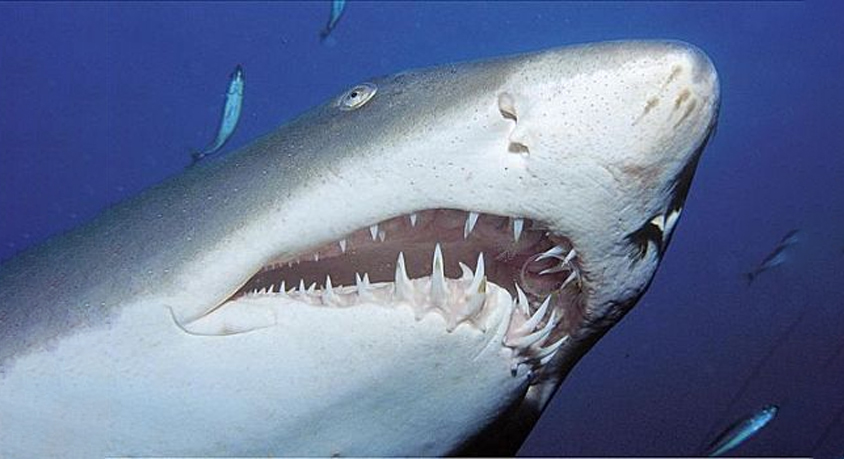
2. Ever-growing Teeth (rodents): As mammals, they have one permanent set. But rapid wear from burrowing/gnawing drove evolution of continuously erupting teeth. Unless fully extracted, their teeth self-renew—enabling "confident smiles."
These adaptations reflect survival needs. Could humans evolve regenerative teeth? Likely not.
Consider whales: Marine mammals readapted to aquatic life but didn't re-evolve replaceable teeth. Baleen whales filter-feed using keratinous plates instead of teeth. Orcas treasure their teeth—hunting injuries severely impact survival. Yet they evolved smarter tactics (e.g., cooperative hunting, drowning prey) rather than tooth regeneration. Mammals prioritize intelligence over dental upgrades.
Herbivores (cows/sheep) and carnivores (cats/dogs) can develop caries. Untreated, they may die from inflammation or starvation. However, caries are rare thanks to natural defenses:
Herbivores' high-fiber diet (grass/leaves) acts as natural toothbrushes during chewing. These indigestible fibers challenge even herbivores' robust digestive systems (some evolved rumination). Bacteria struggle to decompose such residue—a "high-difficulty survival game." Additionally, herbivores only need coarse food fragmentation, reducing dental stress.
Exceptions occur: Nutritional deficiencies during tooth development or trapped debris may cause caries. Unlike humans (where decay starts on occlusal surfaces), herbivore caries often originate at gums. Regular oral checks for livestock remain essential.
Science confirms sugar's role. 18th-century French dentist Emil Magitot proved sugar fermentation dissolves teeth. Sugars break down into acids that erode enamel and create bacterial havens. Studies consistently show higher caries incidence in frequent sugar consumers.
Historically, caries epidemics coincided with industrial-scale sucrose production. Carbonated drinks compound damage—sugar + acid creates a "cavity double threat." Childhood warnings about candy weren't exaggerated. Moderation protects dental health.
Animals lack access to concentrated sugars. Their evolution-shaped diets and oral ecosystems maintain dental health naturally—explaining why we rarely encounter cavity-ridden animals.
MORE FROM WIRED

- SaaS Free Trial Trap: Fix Churn & Convert More—With Targeted Ads & Clear Paths

- Reallocate Your Advertising Budget Using Data-Driven Attribution Models

- Crows Teach AI to Use Tools
- Oct,13,2025

- Build a Marketing Flywheel: Boost Customer LTV
- Oct,06,2025

- 5 A/B Tests That Boost CRO
- Oct,02,2025

- UTM + GA4: Stop Wasting Ad Cash
- Sep,30,2025

- Meta Ad Fatigue: 5 Fixes to Refresh Ads
- Sep,29,2025